

Many people notice subtle changes after turning 60 — energy levels shift, sleep patterns change, and recovery feels slower than before. These changes are natural, but how we respond to them makes a meaningful difference.
Healthy aging after 60 is not about reversing time; it’s about supporting your body and mind in practical, sustainable ways. This guide is for older adults and families who want to focus on strength, independence, and everyday wellness without extreme routines.
From my experience, simple habits like this are easier to maintain and far more effective in the long run.
This article is regularly updated to reflect current wellness practices in 2026.

Who This Guide Is For
- Adults over 60 looking for realistic daily wellness habits
- Families supporting aging parents
- Beginners who want sustainable routines
Who Should Be Careful
- Those with specific medical conditions should seek personal guidance before making major lifestyle changes.
Why Aging Challenges Feel More Noticeable After 60
After 60, muscle mass gradually declines, metabolism slows, and balance can become less stable. These changes are normal — but modern lifestyles often make them worse.
Many people:
- Move less than they used to
- Eat inconsistently
- Sleep poorly
- Experience more isolation
What usually goes wrong is not age itself — it’s inactivity and inconsistency. Small daily neglect compounds over time. The good news? Small positive habits compound too.
A Complete, Science-Backed Guide to Staying Strong, Sharp, and Independent
Aging is inevitable. Decline is not.
After 60, the body changes — metabolism slows, muscle mass gradually decreases, bone density shifts, recovery takes longer, and certain health risks increase. But here’s the empowering truth: daily habits matter more than age itself.
Research consistently shows that lifestyle plays a major role in longevity, independence, and quality of life. Many people in their 60s, 70s, and even 80s live vibrant, energetic lives — not because of luck, but because of daily consistency.
This pillar guide explores nine powerful daily habits that support healthy aging physically, mentally, and emotionally. These practices are practical, sustainable, and especially relevant for families supporting aging parents.
Why Daily Habits Matter More After 60
By 60, small habits compound quickly — for better or worse.
Healthy routines can:
- Reduce risk of chronic disease
- Preserve muscle and bone strength
- Protect cognitive function
- Improve balance and prevent falls
- Enhance mood and emotional resilience
- Support independence longer
Unhealthy routines can accelerate decline.
The key? Consistency over intensity.
Healthy Aging After 60 – What Actually Helps
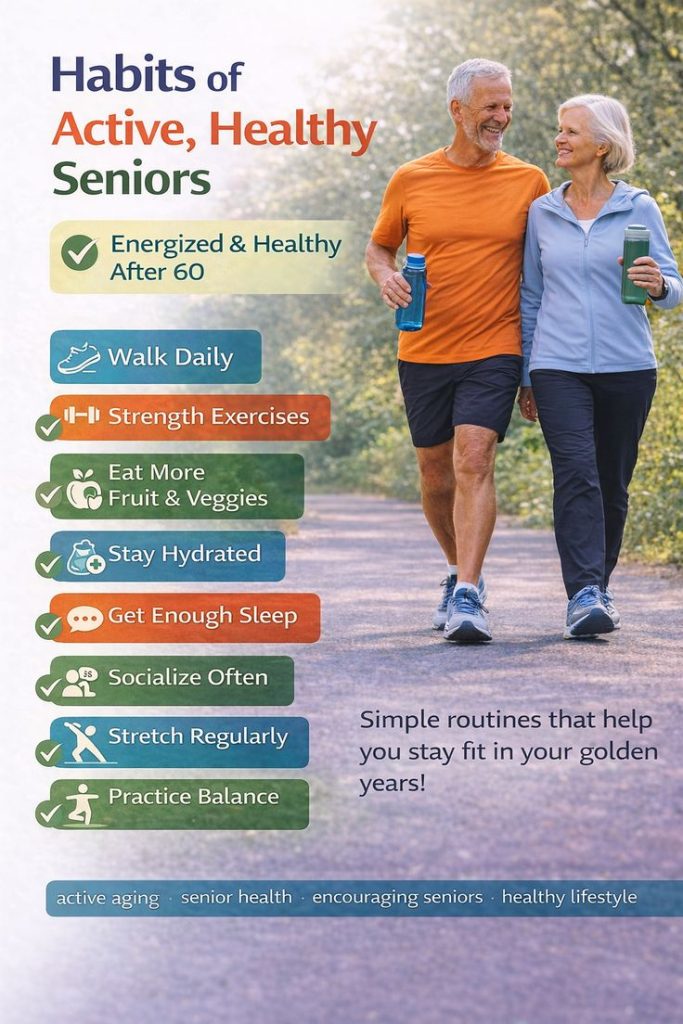
1. Prioritize Daily Movement (Even More Than Intense Exercise)
Movement is medicine — especially after 60.
As we age, sarcopenia (age-related muscle loss) naturally reduces strength and balance. But inactivity accelerates it. The goal isn’t extreme workouts — it’s regular, intentional movement.
What Healthy Movement Looks Like After 60
- 20–30 minutes of brisk walking
- Light strength training 2–3 times per week
- Chair squats, wall push-ups, resistance bands
- Balance work (heel-to-toe walk, standing on one foot)
- Gentle stretching or yoga
Low-impact activities like walking, swimming, or cycling reduce joint strain while maintaining cardiovascular health.
Why It Matters
Daily movement:
- Preserves muscle mass
- Supports joint mobility
- Improves circulation
- Reduces insulin resistance
- Enhances mood
- Decreases fall risk
Even 10-minute movement sessions count.
2. Eat for Strength, Not Just for Weight
After 60, nutritional priorities shift.
The focus should be on:
- Preserving muscle
- Supporting bone density
- Reducing inflammation
- Stabilizing blood sugar
Key Nutritional Principles
1. Increase Protein Intake
Many older adults under-eat protein. Aim for high-quality protein at every meal:
- Eggs
- Lentils
- Greek yogurt
- Fish
- Lean meats
- Tofu
2. Focus on Anti-Inflammatory Foods
Chronic inflammation contributes to heart disease, diabetes, arthritis, and cognitive decline.
Include:
- Leafy greens
- Berries
- Nuts and seeds
- Olive oil
- Fatty fish
3. Support Bone Health
Calcium and vitamin D become crucial for preventing osteoporosis.
Sources:
- Dairy or fortified plant milk
- Sun exposure (safe amounts)
- Leafy vegetables
Avoid crash dieting — muscle loss happens quickly in older adults during calorie restriction.
3. Protect Brain Health Daily
Cognitive health is a top concern after 60 — but decline is not automatic.
The brain remains adaptable through neuroplasticity. Mental stimulation strengthens neural pathways.
Daily Brain-Supporting Habits
- Read books or newspapers
- Learn a new skill
- Do puzzles or memory games
- Engage in meaningful conversations
- Practice a hobby (music, gardening, painting)
Social interaction is particularly protective. Loneliness is strongly linked to cognitive decline and depression.
Mental stimulation + social engagement = cognitive resilience.
4. Sleep With Intention
Sleep patterns change with age. Many adults over 60 experience lighter sleep or earlier wake times.
However, chronic poor sleep increases:
- Heart disease risk
- Memory problems
- Mood disorders
- Inflammation
- Weakened immunity
Healthy Sleep Practices
- Maintain consistent sleep/wake times
- Limit caffeine after early afternoon
- Reduce evening screen exposure
- Keep bedroom cool and dark
- Avoid heavy late-night meals
Aim for 7–8 hours of restful sleep. Quality matters more than duration.
5. Maintain Strong Social Connections
One of the strongest predictors of healthy aging is not diet or exercise — it’s social connection.
Isolation increases risk of:
- Depression
- Dementia
- Cardiovascular disease
- Mortality
Daily Social Practices
- Call a friend or family member
- Participate in community groups
- Join hobby circles
- Attend religious or cultural gatherings
- Volunteer
Families play a major role. Regular intergenerational interaction supports emotional well-being on both sides.
Connection is protective medicine.
6. Manage Stress Proactively
Stress does not disappear with retirement. Health concerns, financial worries, caregiving roles, and life transitions can increase anxiety.
Chronic stress elevates cortisol, which:
- Weakens immunity
- Increases abdominal fat
- Raises blood pressure
- Impacts memory
Daily Stress-Reduction Habits
- 5–10 minutes of deep breathing
- Light meditation
- Prayer or reflection
- Nature walks
- Journaling
Even brief daily mindfulness lowers stress hormones.
7. Monitor and Prevent Chronic Conditions
After 60, proactive health monitoring becomes critical.
Common conditions include:
- Hypertension
- Type 2 diabetes
- Arthritis
- Cardiovascular disease
- Osteoporosis
Daily awareness prevents complications.
Smart Preventive Practices
- Check blood pressure regularly
- Monitor blood sugar if needed
- Take medications as prescribed
- Stay updated on vaccinations
- Schedule routine screenings
Preventive care reduces hospitalization risk and maintains independence.
8. Prioritize Balance and Fall Prevention
Falls are a leading cause of injury after 60 — but most are preventable.
Daily balance training reduces risk dramatically.
Simple Daily Balance Exercises
- Stand on one foot (near support)
- Heel-to-toe walking
- Sit-to-stand repetitions
- Light Tai Chi practice
Also improve home safety:
- Remove loose rugs
- Install grab bars
- Improve lighting
Independence depends heavily on fall prevention.
9. Cultivate Purpose and Positive Mindset
Healthy aging is not only physical — it’s psychological.
People who feel a strong sense of purpose:
- Live longer
- Recover faster from illness
- Show lower inflammation markers
- Experience less depression
Ways to Maintain Purpose After 60
- Mentor younger generations
- Volunteer
- Continue part-time work
- Develop new hobbies
- Set small personal goals
Purpose fuels motivation, and motivation fuels healthy behavior.
How Families Can Support Healthy Aging
If you’re supporting parents or older loved ones, your influence matters.
Encourage:
- Shared meals
- Group walks
- Regular check-ins
- Technology use for connection
- Doctor appointment reminders
Healthy aging is easier with a support system.
Common Myths About Aging After 60
Myth 1: It’s too late to start exercising.
False. Improvements occur at any age.
Myth 2: Memory loss is inevitable.
Mild changes happen, but severe decline is not guaranteed.
Myth 3: Slowing down means stopping.
Activity may adapt — but movement remains essential.
Myth 4: Supplements replace healthy habits.
No pill replaces diet, movement, sleep, and connection.
A Sample Daily Routine for Healthy Aging
Morning
- Gentle stretching
- Protein-rich breakfast
- 15-minute walk
Afternoon
- Social interaction or hobby
- Balanced lunch
- Light strength exercises
Evening
- Family connection
- Light dinner
- Reflection or relaxation practice
- Consistent bedtime
Small routines build long-term resilience.
The Science Behind Healthy Aging
Research in longevity consistently highlights five pillars:
- Movement
- Nutrition
- Social connection
- Stress management
- Purpose
These patterns are observed globally in long-lived populations — not through extreme dieting or intense training, but through daily sustainable habits.
Healthy aging is not about anti-aging. It’s about pro-aging intelligently.
Final Thoughts: Aging Is a Daily Choice
Turning 60 is not a decline marker — it’s a transition.
The body may change, but vitality is still highly influenced by lifestyle.
Start with one habit.
Build consistency.
Add another.
Over months and years, those small daily decisions determine:
- Strength
- Independence
- Cognitive clarity
- Emotional stability
- Overall quality of life
Healthy aging isn’t about adding years to life alone — it’s about adding life to years.
Also read : How to Manage Chronic Health Conditions Naturally and Safely
How to Build a Daily Wellness Routine That Actually Sticks
How to Improve Senior Wellness Naturally : 7 Simple Daily Habits
6 Simple Daily Habits to Strengthen Family Wellness
How to Reduce Stress Naturally in Just 10 Minutes (Simple Daily Techniques)
How to Boost Women’s Energy Levels Naturally:5 Daily Habits
How to Build a Healthy Daily Routine : 7 Simple Steps for Better Wellness
Frequently Asked Questions
Q1: What is the most important habit for healthy aging after 60?
A: There isn’t just one. However, consistent daily movement often has the biggest overall impact. Walking, light strength exercises, and balance training can support mobility, independence, and overall healthy aging after 60 when practiced regularly.
Q2: Is it too late to start new habits after 60?
A: No. Small lifestyle changes can be beneficial at any age. Starting with manageable habits — like short daily walks or improving sleep routines — may gradually support strength, energy, and emotional well-being.
Q3: How long does it take to notice improvements?
A: Results vary from person to person. Some people notice improved energy or better balance within weeks, while for others it takes longer. The key is consistency rather than speed.
Q4: Do supplements replace healthy daily routines?
A: Supplements may support specific nutritional needs, but they do not replace core habits like balanced meals, movement, sleep, and social connection. A healthy lifestyle for older adults works best when built on daily routines first.
Q5: Can family members help support healthy aging?
A: Yes. Encouragement, shared walks, regular check-ins, and helping maintain routines can make healthy habits easier to follow and sustain over time.