

Which of these family habits feels easiest for your family to start today? Simple Daily Habits to Build a Healthy and Happy Family :In today’s fast-paced world, many families feel constantly busy but emotionally disconnected. Between work, school, screens, and responsibilities, spending meaningful time together often becomes an afterthought. Over time, this can affect not only physical health but also emotional bonding and overall happiness at home.
Building a healthy and happy family doesn’t require perfection or complicated routines. Instead, it grows through small daily habits that fit naturally into everyday life. These habits support connection, stability, and emotional safety for every family member. From my experience, families who focus on simple, consistent routines tend to feel more balanced and emotionally connected over time.
This article is regularly updated to reflect current family wellness practices in 2026.

Who This Guide Is For
- This guide is designed for parents and caregivers who want to improve their family’s overall well-being without adding stress or unrealistic expectations.
- It’s especially helpful for busy families who are looking for simple, practical daily routines that fit into real life.
- If you’re a beginner exploring family wellness habits, this guide offers a realistic starting point. The focus is on small, manageable changes that support emotional connection, healthy routines, and long-term balance—without pressure to be perfect.
Who Should Be Careful
- Families managing specific medical or psychological conditions should approach these habits thoughtfully and seek personalized guidance from qualified healthcare or mental health professionals.
- Individual needs can vary, and professional support ensures that wellness practices are safe, appropriate, and effective for your family’s unique situation.
Why Family Wellness Is So Challenging Today
Modern families face constant pressure from schedules, digital distractions, and emotional overload. Even when everyone lives under the same roof, genuine connection can slowly fade. Many parents feel guilty for not doing “enough,” while children may feel unheard or overstimulated.
What usually goes wrong is trying to fix everything at once—strict routines, unrealistic expectations, or comparison with other families. True family wellness is not about control or perfection. It’s about creating a safe, supportive environment through daily habits that feel manageable and sustainable.
Healthy and Happy Family Habits – What Actually Helps
A healthy and happy family life is rarely built on grand gestures or perfect routines. In most homes, what truly makes a difference are small, consistent habits that quietly shape how family members feel, connect, and support one another. Over time, these simple practices create emotional safety, trust, and a sense of belonging that every family needs.
Below are habits that genuinely help—not because they are complicated, but because they fit into real, everyday life.
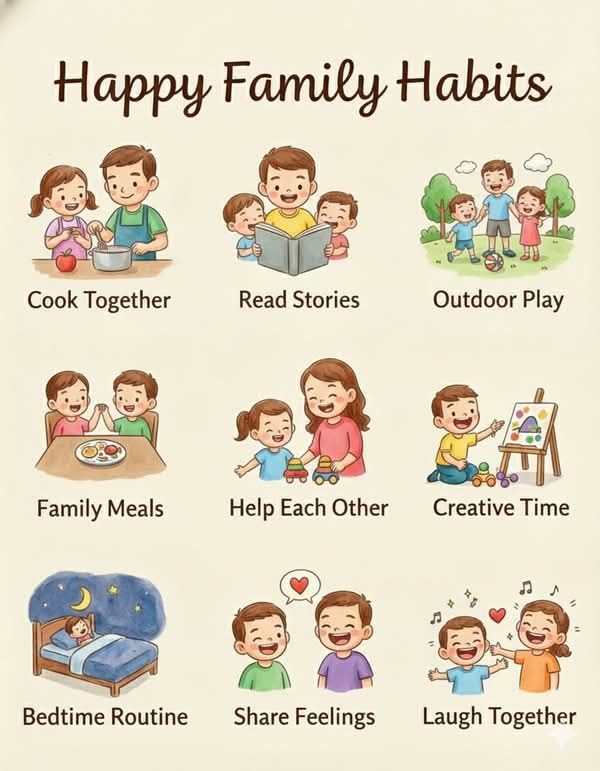
In busy households, it’s easy for days to pass with everyone physically present but emotionally distant. A daily connection moment is a short, intentional pause where family members truly notice one another—without distractions.
This doesn’t need to be elaborate. It could be sharing one meal together, talking for a few minutes about the day, or sitting quietly before bedtime. What matters is that phones, television, and other screens are set aside, even if only for a short while.
These moments naturally fit into daily life—during breakfast, dinner, or bedtime routines. When practiced consistently, they strengthen emotional bonds and remind each family member that they are valued. Over time, children and adults alike begin to feel more secure, heard, and emotionally supported.
2️⃣ Maintain Simple, Predictable Family Routines
Routines are often misunderstood as rigid schedules, but healthy routines are actually gentle anchors in daily life. They provide structure without pressure.
Keeping mealtimes, bedtimes, and morning routines relatively consistent helps everyone know what to expect. This doesn’t mean following the clock perfectly every day—it simply means having a familiar rhythm.
These routines naturally shape mornings, evenings, and weekends. For children, predictability creates a sense of safety. For parents, it reduces daily decision fatigue and stress. When life feels uncertain or busy, simple routines bring calm and stability back into the home.
3️⃣ Encourage Open Communication Without Judgment
A healthy family is one where everyone feels safe expressing thoughts and emotions. Open communication isn’t about solving every problem immediately—it’s about listening without fear of criticism.
This habit begins with listening more than speaking. When a family member shares something, resist the urge to interrupt, correct, or minimize their feelings. Sometimes, being heard is more important than being advised.
Open conversations often happen naturally during car rides, mealtimes, or casual moments at home. When practiced consistently, this habit builds trust and emotional safety. Many families experience deeper connections and fewer misunderstandings simply by allowing honest conversations to exist without judgment.
4️⃣ Model Healthy Emotional Responses
Children learn far more from what adults do than from what they are told. Modeling healthy emotional responses means showing—through actions—how to handle stress, frustration, and disagreement with respect.
This can look like acknowledging when you feel overwhelmed, apologizing after losing patience, or expressing emotions without blame. These moments often occur during conflicts or stressful situations, making them powerful teaching opportunities.
When adults respond calmly and responsibly to emotions, children learn emotional regulation naturally. Over time, they begin to mirror these behaviors, developing resilience and emotional intelligence that benefits them throughout life.
Wellness becomes more meaningful when it’s shared. Creating healthy habits as a family reinforces both physical health and emotional connection.
This might include eating balanced meals together, going for short walks, stretching, or playing outdoor games. These activities don’t need to feel like “exercise” or strict routines—they can simply be moments of movement and enjoyment.
Shared habits often fit easily into evenings, weekends, or time after meals. They help children associate health with togetherness rather than obligation, making these habits more likely to last long-term.
6️⃣ Protect Family Rest and Screen Boundaries
In today’s digital world, rest and screen boundaries are essential for emotional well-being. Protecting family rest means creating space for downtime, sleep, and real connection without constant digital stimulation.
Setting screen-free times—especially during meals and before bedtime—helps everyone unwind mentally. Even small boundaries can significantly improve sleep quality, mood, and focus.
These habits fit naturally into evening and bedtime routines. Over time, families notice better emotional balance, calmer mornings, and improved overall well-being.
Final Thought
Healthy and happy families are not built overnight. They are shaped by small, repeated actions that create safety, trust, and connection. When these habits are practiced consistently—not perfectly—they quietly transform the home into a place where everyone feels supported, understood, and valued.
Real family wellness begins with what you do together, every day.

Reality Check
No two families are the same, and that’s exactly how it should be. What works beautifully for one household may need adjustment in another. Family wellness is not about copying someone else’s routine—it’s about finding what fits your family’s unique rhythm, personalities, and needs.
Progress always matters more than perfection. There will be busy days, missed routines, and moments that don’t go as planned. Those moments do not erase the effort you’ve already made. What truly counts is returning to healthy habits when you can, without guilt or pressure.
Small habits, when practiced daily, have a powerful impact over time. A few minutes of connection, a calm response during stress, or a shared healthy choice may seem insignificant in the moment—but together, they build long-term family wellness, emotional security, and lasting happiness.
- Every family is different
- Progress matters more than perfection
- Small habits practiced daily create long-term family wellness
Quick Reference Family Wellness Checklist
| Habit | How Often | Beginner-Friendly |
| Daily connection time | Daily | Yes |
| Consistent routines | Daily | Yes |
| Open communication | Daily | Yes |
| Emotional modeling | Ongoing | Yes |
| Shared healthy habits | Daily | Yes |
| Screen boundaries | Daily | Yes |
What Results Can You Expect Over Time?
Practicing healthy and happy family habits may help improve emotional bonding, reduce daily stress, enhance communication, and create a more peaceful home environment. Over time, families often notice stronger trust, better cooperation, and a greater sense of togetherness.
Final Takeaway
A healthy and happy family is built through everyday actions, not grand gestures. Simple routines, emotional presence, and shared moments create stability and trust over time. Focus on progress, flexibility, and compassion rather than perfection.
Small Steps Matter
Start with one habit today and allow it to grow naturally. Explore more LifeSyncWell guides to support your family’s wellness journey.
Also read : How to Manage Chronic Health Conditions Naturally and Safely
How to Build a Daily Wellness Routine That Actually Sticks
How to Improve Senior Wellness Naturally : 7 Simple Daily Habits
6 Simple Daily Habits to Strengthen Family Wellness
How to Reduce Stress Naturally in Just 10 Minutes (Simple Daily Techniques)
How to Boost Women’s Energy Levels Naturally:5 Daily Habits
How to Build a Healthy Daily Routine : 7 Simple Steps for Better Wellness
10 Simple Daily Wellness Habits to Improve Your Overall Health Naturally
9 Simple Lifestyle Habits to Improve Daily Wellness Naturally
8 Proven Ways to Build Fitness Consistency Without Burning Out
Morning vs Evening Routines: Which Is Better for a Healthy Lifestyle?
7 Morning Habits That Boost Mental Wellness and Reduce Daily Stress Naturally
Frequently Asked Questions (FAQ)
1. Do we need to follow all six habits every day?
No. These habits are meant to support your family, not overwhelm it. Start with one or two that feel easiest and build gradually. Consistency over time matters far more than doing everything perfectly.
2. What if our family schedule is very busy?
That’s completely normal. These habits are designed to fit into everyday life, even for busy families. Small moments—like a short conversation, a shared meal, or a screen-free bedtime routine—are often enough to make a meaningful difference.
3. How long does it take to see positive changes?
Some benefits, like better communication or calmer evenings, can appear within days or weeks. Long-term emotional security and stronger bonds develop gradually through repeated daily practice.
4. Will these habits work for children of all ages?
Yes. These habits can be adapted for toddlers, school-age children, teenagers, and even adult family members. The key is adjusting how you communicate and connect based on age and individual needs.
5. What if family members resist new habits?
Resistance is common, especially at first. Introduce changes gently and lead by example. When habits feel supportive rather than forced, family members are more likely to participate over time.
6. Can these habits replace professional support?
No. While these habits support emotional and physical well-being, families dealing with medical, psychological, or behavioral challenges should seek personalized guidance from qualified professionals.
7. What’s the most important habit to start with?
Daily connection is often the most impactful. Even a few minutes of intentional, distraction-free time together can strengthen relationships and create a foundation for other healthy habits.