

6 Gentle Movement Practices to Improve Strength and Balance in Seniors : Which of these habits feels easiest for you to start today?Have you ever stood up quickly and felt slightly unsteady? Or noticed that climbing stairs takes a bit more effort than it used to? These small changes are common with age — but they don’t mean strength and balance have to decline rapidly.
Gentle movement practices for seniors can support stability, confidence, and everyday independence without intense workouts. This guide is designed for older adults and families looking for safe, practical routines that fit into daily life.
From my experience, simple habits like this are easier to maintain and more sustainable over time. It often starts with something small — holding onto the railing a little tighter while climbing stairs, pausing before stepping off a curb, or feeling slightly unsure when standing up too quickly. These moments are common as we age, but they are not a sign that strength and balance are gone for good.
Gentle movement practices for seniors can play a powerful role in maintaining independence, confidence, and daily comfort. This isn’t about intense gym sessions or complicated routines. It’s about simple, sustainable movements that fit naturally into everyday life.
From my experience, simple habits like this are easier to maintain and far more effective in the long run.
This article is regularly updated to reflect current wellness practices in 2026.
WHO THIS GUIDE IS FOR
This guide is designed for older adults who want to feel steadier, stronger, and more confident in their movements. It is also helpful for family members supporting aging parents who may be hesitant to start exercise routines.
Those with specific medical conditions, recent surgeries, or balance disorders should seek personalized guidance before beginning any new physical routine.
Why Strength and Balance Decline Is So Common Today
Strength and balance naturally change with age. Muscle mass gradually decreases, joints may feel stiffer, and reaction time can slow slightly. However, modern lifestyles often accelerate these changes.
Many seniors move less after retirement. Long periods of sitting, limited outdoor activity, and fear of falling can reduce daily movement. Unfortunately, the less we move, the weaker muscles become. This creates a cycle — reduced strength leads to less confidence, which leads to even less movement.
What usually goes wrong is not aging itself — it’s inactivity. The body adapts to what we regularly do. When we move gently and consistently, it adapts positively.
Gentle Movement Practices for Seniors – What Actually Helps
Rather than focusing on intense workouts, the goal is steady, low-impact movement that strengthens key muscle groups and improves coordination.
1. Mindful Daily Walking
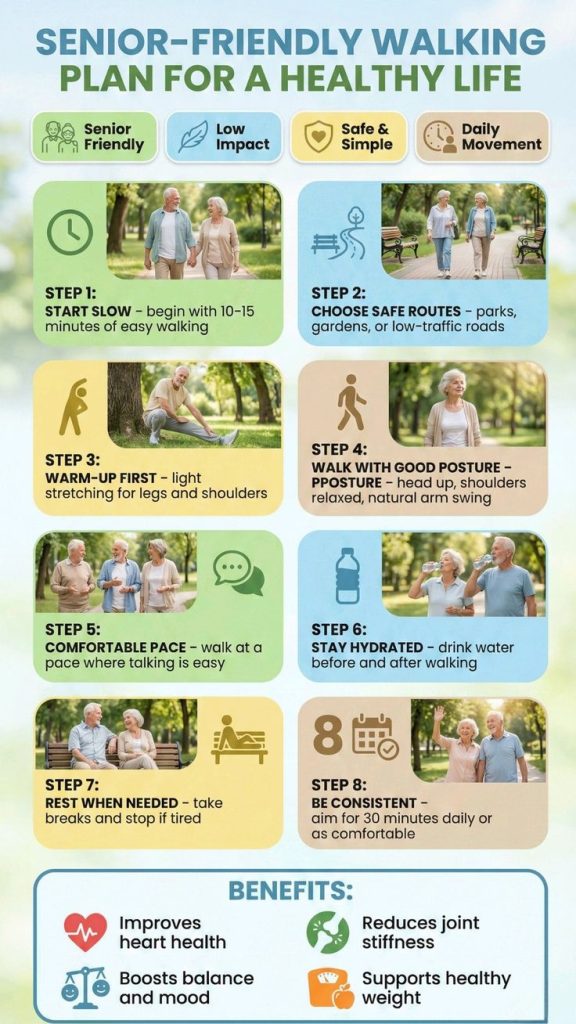
Walking remains one of the most effective and accessible movements for seniors. It requires no special equipment and can be adjusted to any fitness level.
A purposeful walk — even 15 to 20 minutes a day — engages the legs, hips, and core. It improves coordination and supports circulation. Over time, regular walking can increase confidence in mobility and reduce stiffness.
The key is consistency, not speed. Walking in a park, around the neighborhood, or even inside a shopping mall can all be effective options. Supportive shoes and a safe walking surface make a difference.
Walking becomes even more beneficial when combined with posture awareness — standing tall, looking forward, and taking steady steps.
2. Controlled Sit-to-Stand Movements
Standing up from a chair may seem simple, but it is one of the most functional strength exercises for seniors. This movement directly strengthens the thighs and hips — two areas essential for balance and fall prevention.
Instead of rushing through it, try standing up slowly, pausing briefly, and sitting back down with control. Repeating this movement several times builds lower-body strength in a safe way.
This exercise fits naturally into daily life. It can be done during television breaks or before meals. Many people notice that over time, standing becomes easier and more stable.
I have seen this work for many people when followed consistently.
3. Gentle Balance Practice at Home
Balance improves when it is practiced intentionally. A simple method involves standing near a wall or sturdy surface and shifting weight slowly from one foot to the other.
Another effective movement is placing one foot directly in front of the other — heel touching toe — and walking slowly across a room. This strengthens stabilizing muscles and improves coordination.
Balance practice doesn’t require long sessions. Even a few focused minutes each day can support steadiness. The goal is calm, controlled movement — never rushing.
4. Wall-Based Upper Body Strength
Upper body strength is often overlooked, yet it plays a major role in independence. Carrying groceries, pushing doors, or using handrails all require upper-body stability.
Wall push-ups are a safe alternative to floor exercises. Standing an arm’s length from a wall and gently pressing forward strengthens the chest, shoulders, and arms without straining joints.
Because the intensity is adjustable by stepping closer or farther from the wall, this movement works for different strength levels.
5. Daily Stretching for Mobility
Tight muscles can reduce balance and comfort. Gentle stretching keeps joints moving smoothly and reduces stiffness.
Slow stretches for the calves, hips, shoulders, and neck can be done in the morning or before bed. The emphasis should be on smooth breathing and controlled movement — not pushing to discomfort.
Stretching supports posture and makes other movements feel easier.
6. Slow Flow Movements Inspired by Tai Chi
Slow, flowing movements help improve body awareness and coordination. Inspired by Tai Chi principles, these movements involve shifting weight gently while moving the arms in controlled patterns.
This type of movement enhances focus and stability at the same time. Many seniors find it calming and confidence-building.
Because movements are slow and deliberate, they reduce the risk of sudden imbalance.
REALITY CHECK
Results vary from person to person. Some may feel steadier within weeks, while others notice gradual improvement over time.
Small steps matter more than dramatic changes. Consistency supports long-term wellness.
Quick Reference Checklist
| Practice | How Often | Beginner Friendly |
| Walking | Daily | Yes |
| Sit-to-Stand | 3–4 times/week | Yes |
| Balance Shifts | Daily | Yes |
| Wall Push-Ups | 2–3 times/week | Yes |
| Stretching | Daily | Yes |
| Slow Flow Movements | 2–3 times/week | Yes |
What Results Can You Expect Over Time?
With consistent gentle movement practices for seniors, many people notice improved stability and confidence. Daily activities like getting out of a car, climbing stairs, or walking on uneven surfaces may feel easier.
These practices can support:
- Better posture
- Improved coordination
- Greater leg and core strength
- Increased confidence in movement
There are no quick fixes — but steady routines often improve overall mobility.
Final Takeaway
Strength and balance do not disappear overnight — and they don’t require intense workouts to maintain.
Gentle, consistent movement can support independence and confidence at any age.
Focus on small daily practices rather than dramatic change.
Progress builds quietly over time.
Small Steps Matter
Start with one simple movement today — perhaps a short walk or a few sit-to-stand repetitions.
Save this article, revisit it, and build slowly. Wellness after 60 is about steady progress, not perfection.
Also read : How to Manage Chronic Health Conditions Naturally and Safely
How to Build a Daily Wellness Routine That Actually Sticks
How to Improve Senior Wellness Naturally : 7 Simple Daily Habits
9 Simple Lifestyle Habits to Improve Daily Wellness Naturally
8 Proven Ways to Build Fitness Consistency Without Burning Out
Morning vs Evening Routines: Which Is Better for a Healthy Lifestyle?
7 Morning Habits That Boost Mental Wellness and Reduce Daily Stress Naturally
Calm Your Mind Naturally: 7 Natural Ways Just 10 Minutes a Day
Frequently Asked Questions
Q1: Are gentle exercises enough to build strength in seniors?
Yes. Gentle movement practices for seniors can support strength when performed consistently and with proper form.
Q2: How often should balance exercises be done?
Short daily sessions are often more effective than occasional long workouts.
Q3: Is it safe to start after 70 or 80?
Many low-impact movements can be adapted to different ages and ability levels. Personal guidance is recommended if unsure.