
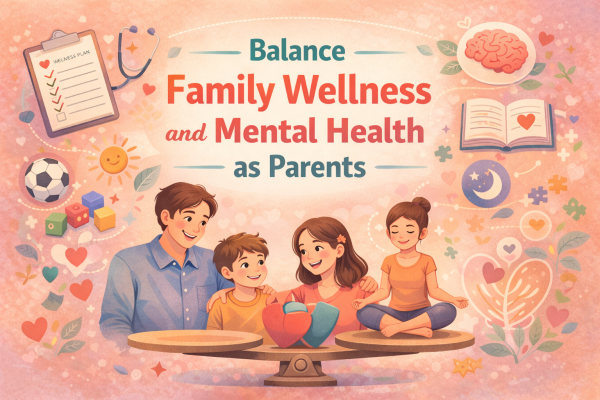
Which habit feels most helpful for your parenting journey right now? Practical Ways Parents Can Balance Family Wellness and Mental Health: Parenting today often feels like juggling too many responsibilities at once. Between caring for children, managing household tasks, meeting work demands, and carrying emotional expectations, many parents quietly place their own mental health at the bottom of the list. At first, this may seem manageable. Over time, however, the imbalance begins to show—not just in parents, but in the entire family environment.
Balancing family wellness and mental health does not mean eliminating stress, controlling every emotion, or becoming a “perfect” parent. It means building supportive routines that care for emotional well-being alongside daily responsibilities. These small, intentional habits help parents stay grounded while nurturing a calm, emotionally safe home.
From real-world experience, families feel more stable when parental mental health is treated as part of family wellness—not something separate or optional.
This article is regularly updated to reflect current family and mental wellness practices in 2026.

Who This Guide Is For
This guide is meant for parents who feel mentally overwhelmed and emotionally stretched while trying to care for everyone else. It supports families seeking emotional balance rather than rigid systems and caregivers who want sustainable wellness routines that work in real life.
Who Should Be Careful
Parents experiencing severe emotional distress, burnout, or mental health challenges should seek personalized professional guidance. This guide supports wellness habits but does not replace medical or psychological care.
Why Parents Struggle to Balance Family Wellness and Mental Health
Many parents pour all their energy into meeting their children’s needs while quietly ignoring their own emotional state. Guilt often plays a role—self-care can feel selfish or unnecessary. Exhaustion, lack of time, and constant comparison to other families (especially online) make balance feel unrealistic.
What usually goes wrong is the belief that stress must simply be pushed through. Parents keep going without pause, telling themselves they’ll rest “later.” Over time, this emotional overload shows up as irritability, chronic fatigue, emotional numbness, or disconnection within the family.
Family wellness works best when parents acknowledge their mental health as a foundation—not an afterthought. When parents feel supported emotionally, the entire household benefits.
Balance Family Wellness and Mental Health – What Actually Helps
1️⃣ Accept That Parental Mental Health Matters
Balancing family wellness begins with a mindset shift. Parental mental health is not a luxury—it directly affects the emotional tone of the home.
This means releasing the idea that good parents must always be strong, self-sacrificing, or emotionally unaffected. Parents are human, and acknowledging emotional needs is a sign of responsibility, not weakness.
This habit fits into daily life through simple self-talk. Replacing thoughts like “I should handle this better” with “I’m doing my best right now” can reduce internal pressure. Emotionally balanced parents naturally create calmer, safer family environments.
2️⃣ Build Small Daily Mental Reset Moments
Stress doesn’t always come from big problems—it often builds quietly through nonstop demands. Mental reset moments are short pauses that help release emotional tension before it accumulates.
These moments can be as simple as deep breathing, sipping tea in silence, stepping outside for fresh air, or sitting quietly for five minutes. They fit naturally between tasks, after school hours, or in the evening.
When practiced consistently, these small resets prevent emotional overload. Many parents notice improved patience and clearer thinking—not because life became easier, but because stress no longer piled up unchecked.
✨ Helpful Point
Mental wellness doesn’t require long breaks. Even brief pauses can reset the nervous system and prevent burnout.
3️⃣ Keep Family Routines Flexible, Not Rigid
Routines are meant to support families, not control them. Healthy routines offer structure while allowing room for real life.
This might look like consistent meal and bedtime patterns with flexibility when days don’t go as planned. Some evenings will be messier, louder, or later—and that’s okay.
Flexible routines fit naturally into mornings, evenings, and weekends. They reduce stress by removing the pressure of perfection while still providing emotional stability, especially for children.
4️⃣ Encourage Emotional Expression at Home
A balanced family environment allows emotions to exist without fear or judgment. This includes parents expressing emotions honestly—not just children.
Encouraging emotional expression means normalizing feelings like frustration, sadness, or exhaustion without immediately fixing or dismissing them. These conversations often happen during meals, bedtime, or quiet moments together.
When emotions are expressed openly, they lose their intensity. Trust grows, misunderstandings reduce, and family members feel emotionally safe rather than emotionally controlled.
✨ Helpful Point
Children learn emotional regulation not from silence, but from watching adults express emotions calmly and honestly.
5️⃣ Reduce Mental Overload, Not Just Physical Tasks
Many parents try to cope by doing more—organizing better, multitasking harder, or pushing themselves further. But mental overload often comes from expectations, comparisons, and constant decision-making.
Reducing mental overload may involve limiting social media exposure, releasing unrealistic parenting standards, or saying no to unnecessary commitments. These changes fit into daily decisions and digital habits.
Mental clarity supports emotional balance far more than constant productivity. A calmer mind creates more patience, presence, and emotional availability at home.
Calm doesn’t have to be a solo activity. Shared family calm strengthens connection while supporting everyone’s nervous system.
Simple activities like walks, quiet games, relaxed conversations, or shared meals create natural moments of peace. These usually fit into evenings or weekends without needing special planning.
When calm is experienced together, emotional bonds deepen and tension fades. Over time, families begin to associate togetherness with comfort rather than chaos.
7️⃣ Let Go of Perfection and Focus on Connection
Perfection is one of the biggest barriers to family wellness. Chasing flawless routines or ideal behavior often creates stress instead of stability.
Focusing on connection means prioritizing emotional availability over performance. Being present, listening, and responding with empathy matters more than getting everything right.
This habit shows up in everyday interactions—how parents respond during difficult moments, how they repair after conflict, and how they show up emotionally. Connection builds resilience far more effectively than perfection ever could.
Reality Check
Parenting stress is normal. Feeling overwhelmed, tired, or emotionally stretched does not mean you’re failing—it means you’re human. Every parent experiences moments of doubt and exhaustion, especially while trying to balance family needs and personal well-being.
Mental balance develops gradually, not overnight. There is no quick fix or perfect routine that removes stress completely. Emotional stability grows through awareness, patience, and small adjustments made over time.
Small habits matter far more than big changes. A few minutes of calm, a gentle response during stress, or choosing connection over perfection may seem minor—but practiced consistently, these habits quietly shape a healthier, more emotionally balanced family life.
- Parenting stress is normal
- Mental balance develops gradually
- Small habits matter more than big changes
Parent Mental Wellness Checklist
| Habit | How Often | Beginner-Friendly |
| Mental reset moments | Daily | Yes |
| Flexible routines | Daily | Yes |
| Emotional expression | Daily | Yes |
| Reduced mental overload | Ongoing | Yes |
| Shared calm activities | Weekly | Yes |
| Connection focus | Daily | Yes |
What Results Can You Expect Over Time?
Balancing family wellness and mental health may support calmer parenting, improved communication, reduced burnout, and a more emotionally secure family environment over time.

Final Reflection
Balancing family wellness and mental health is not about doing more—it’s about doing what truly supports emotional well-being. When parents care for their mental health with intention and compassion, they model balance, resilience, and emotional strength for the entire family.
Small habits practiced daily create stability, trust, and calm. And over time, they transform the home into a place where everyone—not just children—can feel supported, understood, and emotionally well.
Small Steps Matter
Start with one habit that feels manageable today. Explore more LifeSyncWell guides to support family wellness and mental balance.
Also read : How to Manage Chronic Health Conditions Naturally and Safely
How to Build a Daily Wellness Routine That Actually Sticks
How to Improve Senior Wellness Naturally : 7 Simple Daily Habits
6 Simple Daily Habits to Strengthen Family Wellness
How to Reduce Stress Naturally in Just 10 Minutes (Simple Daily Techniques)
How to Boost Women’s Energy Levels Naturally:5 Daily Habits
How to Build a Healthy Daily Routine : 7 Simple Steps for Better Wellness
10 Simple Daily Wellness Habits to Improve Your Overall Health Naturally
9 Simple Lifestyle Habits to Improve Daily Wellness Naturally
8 Proven Ways to Build Fitness Consistency Without Burning Out
Morning vs Evening Routines: Which Is Better for a Healthy Lifestyle?
7 Morning Habits That Boost Mental Wellness and Reduce Daily Stress Naturally
Calm Your Mind Naturally: 7 Natural Ways Just 10 Minutes a Day
Frequently Asked Questions
Q1: Is it normal for parents to feel mentally exhausted?
A: Yes, mental fatigue is common, especially when responsibilities are constant.
Q2: How can parents care for mental health without feeling selfish?
A: Supporting parental mental health often benefits the entire family.
Q3: Do small habits really help mental balance?
A: Consistent small habits often support long-term emotional stability.