

Which daily habit feels easiest for you to start today? Most people want better health, more energy, and a sense of balance that lasts—but daily life often makes that difficult. Busy schedules, constant responsibilities, mental stress, irregular meals, poor sleep, and endless screen exposure slowly take a toll on both physical and emotional well-being. At first, these disruptions seem small. Over time, they quietly accumulate and begin to affect how the body feels, functions, and recovers.
Building healthy daily habits for long-term wellness does not require extreme diets, strict schedules, or rigid self-discipline. True wellness grows from simple, natural habits that fit into real life—habits that feel calm, flexible, and sustainable. This guide focuses on practical daily routines that support balance, stability, and overall well-being over time. From experience, habits that feel realistic are the ones people actually maintain.
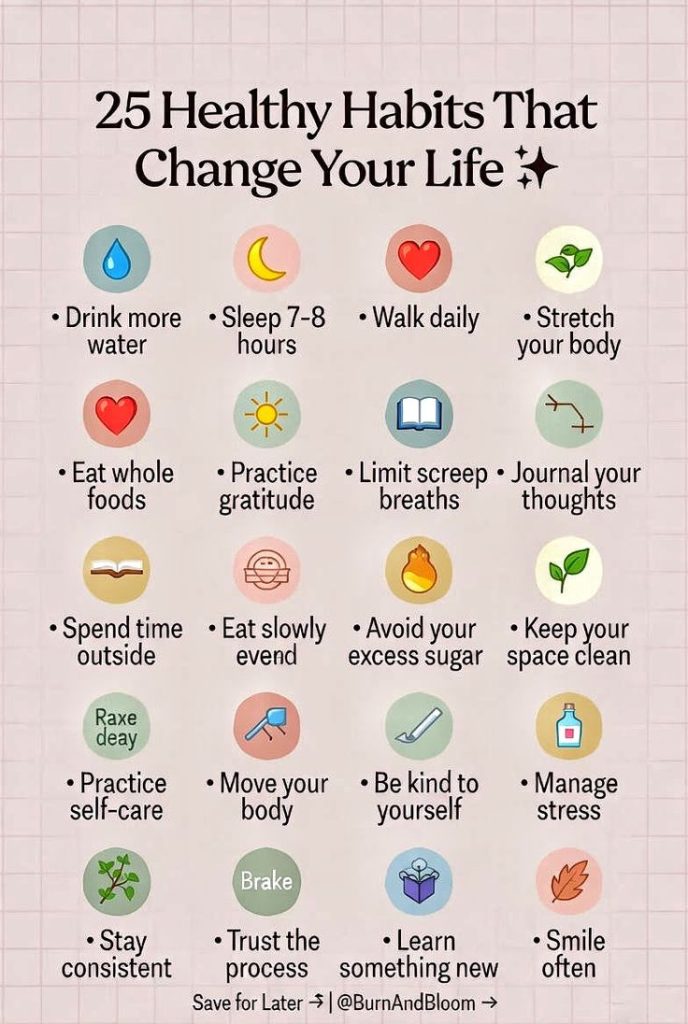
Who This Guide Is For
This guide is for people who want to feel better in a sustainable way—not just temporarily. It’s ideal for those seeking long-term wellness habits that support energy, calmness, and balance without pressure.
It’s especially helpful for beginners starting a healthy lifestyle who feel overwhelmed by conflicting advice or unrealistic expectations. It also supports anyone who wants steady improvement rather than short bursts of motivation.
Who Should Be Careful
Those with specific medical conditions should follow lifestyle habits alongside guidance from qualified healthcare professionals. These habits are supportive but not a replacement for medical care.
Why Long-Term Wellness Often Feels Hard to Maintain
Many wellness plans fail not because people lack motivation—but because the plans demand too much, too quickly. Changing diet, exercise, sleep, mindset, and productivity all at once creates mental overload. When routines feel strict or stressful, consistency breaks down.
Another challenge is the focus on short-term results. Wellness is often measured by quick outcomes—weight loss, energy spikes, or productivity gains. But true wellness is built slowly. It develops through daily actions repeated over time, even when progress feels subtle.
Long-term wellness requires habits that are flexible, forgiving, and supportive, not perfect. Healthy daily habits create a stable foundation that allows the body and mind to function smoothly—even during busy or stressful periods.
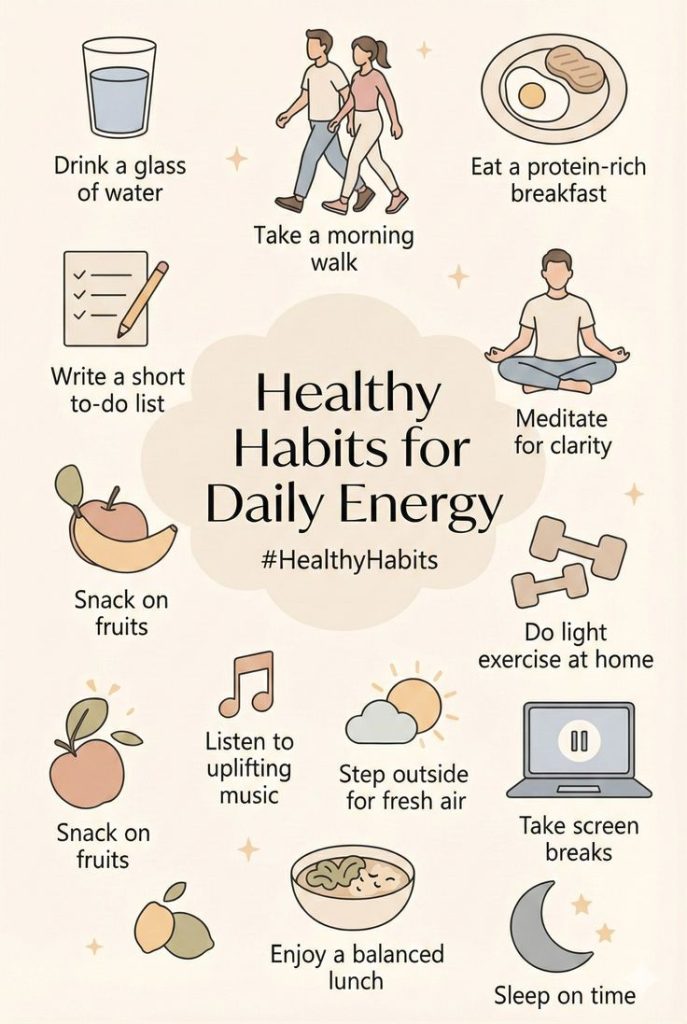
Healthy Daily Habits for Long-Term Wellness – What Actually Helps
1️⃣ Maintain a Consistent Daily Routine
A consistent daily routine helps regulate the body’s internal systems. Waking up, eating, moving, and sleeping around similar times each day creates rhythm and predictability.
This doesn’t mean following a strict schedule. It means choosing realistic timings that work most days and returning to them gently when life disrupts routine.
Consistency reduces decision fatigue, stabilizes energy levels, and lowers stress on the nervous system. Over time, the body begins to feel safer, calmer, and more balanced.
💡 Helpful Point:
Routine is about rhythm, not rigidity.
2️⃣ Eat Balanced Meals Without Overthinking
Nutrition doesn’t need to be complicated to be effective. Balanced meals that include vegetables, proteins, healthy fats, and carbohydrates support steady energy and nourishment.
Focusing on home-cooked, minimally processed foods most of the time is enough. Over-restriction or constant food rules often lead to stress, guilt, or burnout.
When meals are balanced and regular, blood sugar remains steadier, digestion improves, and cravings reduce naturally—supporting long-term wellness without pressure.
💡 Helpful Point:
Eating calmly and regularly often matters as much as what you eat.
3️⃣ Move Your Body Gently Every Day
Daily movement is essential—but it doesn’t need to be intense. Gentle, regular movement supports circulation, joint health, flexibility, and mood stability.
Walking, stretching, yoga, or simple mobility exercises fit easily into daily life. Movement can happen in the morning, after meals, or in the evening—whatever feels most natural.
Gentle daily movement builds long-term strength without exhaustion and helps the body stay adaptable as it ages.
4️⃣ Manage Stress Before It Accumulates
Stress rarely comes from one big event. It builds slowly through constant stimulation, pressure, and lack of rest.
Managing stress daily means noticing mental load early and responding with small calming actions—slow breathing, short breaks, reduced screen exposure, or moments of quiet.
When stress is addressed before it accumulates, digestion improves, sleep deepens, and emotional reactions soften. I have seen this work for many people when practiced consistently.
💡 Helpful Point:
Calm is a daily practice, not a reward after everything is done.
5️⃣ Prioritize Quality Sleep
Sleep is one of the strongest foundations of long-term wellness. Regular, restful sleep allows the body to repair, regulate hormones, and restore emotional balance.
Creating a calming wind-down routine—lowering lights, limiting screens, and keeping a consistent bedtime—signals the body that it’s safe to rest.
Quality sleep supports immunity, mental clarity, emotional resilience, and physical recovery. Without it, even the best habits feel harder to maintain.
6️⃣ Stay Hydrated Throughout the Day
Hydration is often underestimated. Drinking water regularly—not just when thirsty—supports digestion, circulation, joint comfort, and energy levels.
Small sips across the day are easier than large amounts at once. Warm water or herbal drinks can be gentler for digestion and comfort.
Proper hydration reduces fatigue, headaches, and digestive discomfort, making daily wellness habits easier to sustain.
7️⃣ Support Mental Wellness Daily
Mental wellness directly influences physical health and habit consistency. Caring for emotional balance doesn’t require long practices—it requires intention.
Journaling, gratitude reflection, quiet moments, creative activities, or mindful breathing help regulate emotions and reduce mental clutter.
When mental wellness is supported daily, motivation improves naturally and healthy habits feel less forced.
💡 Helpful Point:
A calm mind supports a consistent body.
8️⃣ Reduce One Unnecessary Daily Trigger
Wellness is not only about adding good habits—it’s also about removing unnecessary stressors.
This could mean less social media scrolling, fewer comparisons, reduced news exposure, or limiting interactions that drain energy.
Removing even one daily trigger can significantly lower mental load and create space for clarity and calm.
9️⃣ Focus on Consistency, Not Perfection
Perfection is the enemy of long-term wellness. Missing a habit occasionally does not undo progress.
Doing small habits regularly—even imperfectly—builds trust with yourself and supports sustainable change.
When consistency becomes the goal, wellness grows naturally and gently over time.
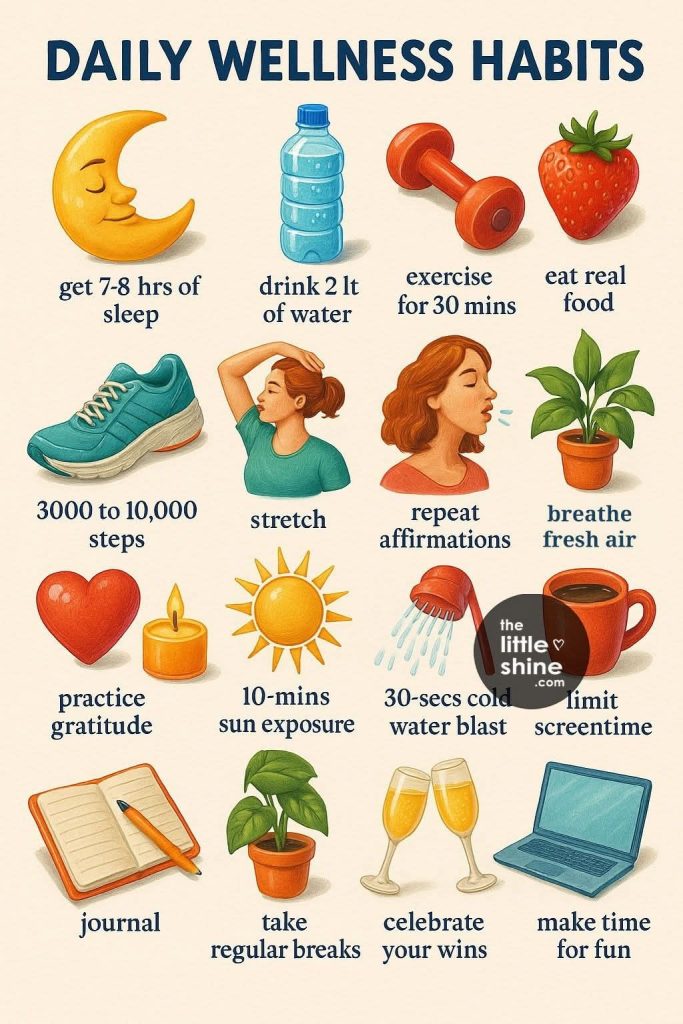
Reality Check
Wellness progress is gradual, not instant.
Small habits matter more than big changes.
Consistency—not intensity—supports long-term results.
Daily Wellness Habit Checklist
| Habit | How Often | Beginner-Friendly |
| Consistent routine | Daily | Yes |
| Balanced meals | Daily | Yes |
| Gentle movement | Daily | Yes |
| Stress management | Daily | Yes |
| Quality sleep | Daily | Yes |
| Hydration | Daily | Yes |
What Results Can You Expect Over Time?
Practicing healthy daily habits for long-term wellness may support better energy, improved mood, reduced stress, improved sleep quality, and stronger overall balance when followed patiently and consistently.
Final Takeaway
Long-term wellness is built quietly through daily choices. Healthy habits do not need to be extreme or overwhelming. Simple routines practiced consistently create stability, balance, and resilience over time. Start small, stay patient, and allow wellness to grow naturally.
Small Steps Matter
Choose one habit today and begin there.
Save this guide for daily reference.
Explore more LifeSyncWell wellness articles for long-term support.
Also read : How to Manage Chronic Health Conditions Naturally and Safely
How to Build a Daily Wellness Routine That Actually Sticks
How to Improve Senior Wellness Naturally : 7 Simple Daily Habits
6 Simple Daily Habits to Strengthen Family Wellness
How to Reduce Stress Naturally in Just 10 Minutes (Simple Daily Techniques)
How to Boost Women’s Energy Levels Naturally:5 Daily Habits
How to Build a Healthy Daily Routine : 7 Simple Steps for Better Wellness
10 Simple Daily Wellness Habits to Improve Your Overall Health Naturally
9 Simple Lifestyle Habits to Improve Daily Wellness Naturally
8 Proven Ways to Build Fitness Consistency Without Burning Out
Morning vs Evening Routines: Which Is Better for a Healthy Lifestyle?
7 Morning Habits That Boost Mental Wellness and Reduce Daily Stress Naturally
Calm Your Mind Naturally: 7 Natural Ways Just 10 Minutes a Day
Frequently Asked Questions
Q1: What are healthy daily habits for long-term wellness?
A: Healthy daily habits for long-term wellness include consistent routines, balanced meals, gentle movement, stress management, quality sleep, and hydration.
Q2: How long does it take to see wellness benefits?
A: Many people notice gradual improvements over weeks or months with consistent habits.
Q3: Do I need strict routines for wellness?
A: No. Flexible, realistic habits are easier to maintain long term.
Q4: Can beginners follow these habits easily?
A: Yes. These habits are designed to fit real life and beginner routines.