

Practical Self-Care Habits That Actually Prevent Burnout : Which of these habits feels most realistic for you to begin this week? You wake up tired. Even after a full night’s sleep, your energy feels low. Tasks that once felt manageable now seem overwhelming. If you’ve been feeling emotionally drained or constantly “on edge,” you may be closer to burnout than you realize.
Learning how to prevent burnout isn’t about quitting your job or escaping responsibilities. It’s about building daily habits that protect your energy before exhaustion builds up.
This guide is designed for busy professionals, caregivers, and anyone juggling multiple responsibilities. From my experience, simple habits like this are easier to maintain and more sustainable long-term.
This article is regularly updated to reflect current wellness practices in 2026.
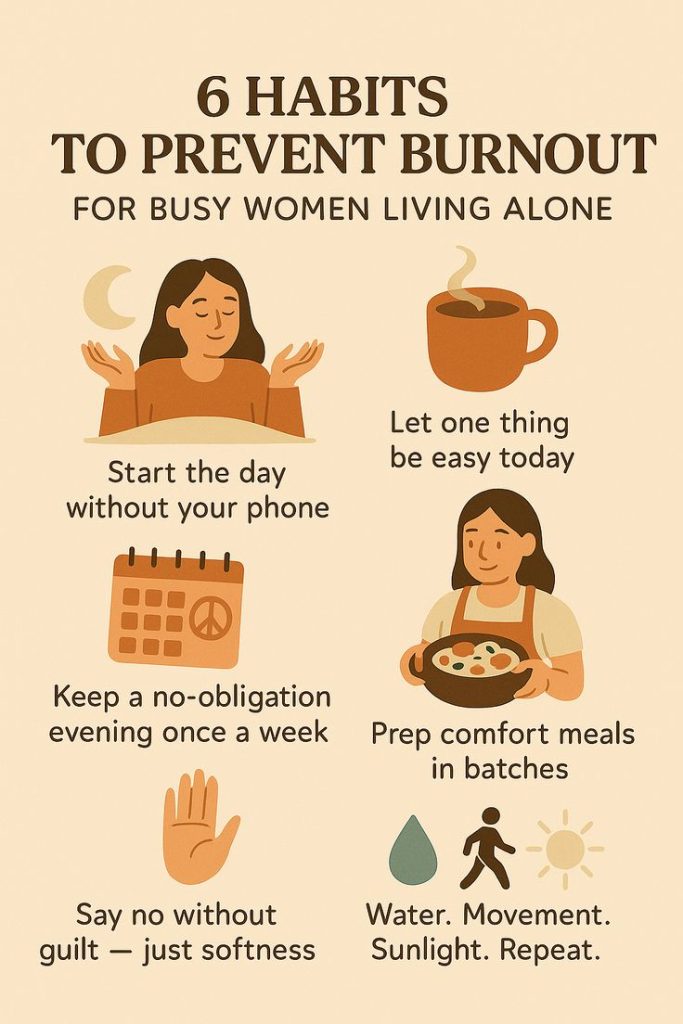
Who This Guide Is For
- People feeling emotionally drained
- Busy professionals managing heavy workloads
- Parents and caregivers balancing multiple roles
- Anyone wanting practical daily stress support
Who Should Be Careful
- Those experiencing severe mental health symptoms should seek personal medical guidance
- Individuals under professional treatment for chronic stress conditions
Why Burnout Is So Common Today
Modern life rewards productivity but rarely encourages recovery.
What is happening:
- Long work hours
- Constant digital notifications
- Blurred boundaries between work and home
- High expectations with little downtime
Why people struggle:
Most people respond to stress by pushing harder instead of resting smarter.
What usually goes wrong:
- Skipping breaks
- Ignoring early warning signs
- Relying only on caffeine
- Sacrificing sleep
Burnout doesn’t happen overnight. It builds gradually when recovery is missing from the routine.
Prevent Burnout – What Actually Helps
Burnout rarely comes from one bad day. It builds quietly through small patterns repeated daily — skipped breaks, blurred boundaries, constant stimulation, and ignored fatigue. The following habits focus on prevention, not crisis management.
1. Set Clear Work Boundaries
What it is:
Clear work boundaries mean defining when your workday begins and, more importantly, when it ends. Without a defined stopping point, work slowly expands into evenings, meals, and even bedtime.
Why boundaries are essential:
When your brain doesn’t receive a signal that “work is over,” it stays in problem-solving mode. Emails checked at night, unfinished tasks replayed in your mind, and constant availability keep stress levels elevated.
Over time, this prevents real recovery.
How to do it realistically:
- Choose a fixed daily stop time (e.g., 6:00 PM).
- Inform colleagues if necessary.
- Avoid checking emails after that time.
- Create a small closing ritual: shut your laptop, tidy your desk, or take a short 5-minute walk.
That ritual acts as a psychological transition.
Why it helps:
Boundaries allow your nervous system to shift from “performance mode” into “recovery mode.” Without this shift, stress remains active throughout the evening, increasing emotional exhaustion over time.
2. Take Scheduled Micro-Breaks
What it is:
Short, intentional 5-minute pauses every 60–90 minutes during focused work.
Why this matters:
Mental fatigue doesn’t appear suddenly. It accumulates gradually. When we ignore early signs — eye strain, irritability, difficulty concentrating — exhaustion builds unnoticed.
How to implement micro-breaks:
- Stand up from your chair.
- Stretch your shoulders and neck.
- Step outside briefly if possible.
- Take 10 slow breaths.
- Look at something distant to relax eye muscles.
Set a timer if needed — don’t rely on memory.
Why it helps:
Micro-breaks prevent mental overload from building to the point of burnout. They allow your attention system to reset and your body to release small amounts of tension before it compounds.
I have seen this work for many people when followed consistently.
3. Protect Your Sleep Routine
What it is:
Going to bed and waking up at consistent times, even on weekends when possible.
Why sleep is foundational:
Sleep is when your body and mind recover from daily stress. Without adequate rest, emotional regulation weakens, patience decreases, and mental clarity declines.
Burnout risk increases significantly when sleep is inconsistent.
How to protect your sleep:
- Reduce screen exposure at least 30–60 minutes before bed.
- Keep your bedroom dark and slightly cool.
- Avoid heavy meals late at night.
- Maintain a calming pre-sleep routine.
Why it helps:
Quality sleep supports emotional balance, improves focus, and restores physical energy. It doesn’t solve stress — but it strengthens your ability to handle it.
4. Say “No” When Necessary
What it is:
Respecting your limits instead of automatically agreeing to every request.
Why this is difficult:
Many people fear disappointing others. However, constant overcommitment stretches your time and energy beyond sustainable levels.
How to practice it:
- Pause before responding.
- Ask yourself: “Do I realistically have time and energy for this?”
- Use polite but clear responses:
- “I’m currently at capacity.”
- “I won’t be able to take this on right now.”
- “I’m currently at capacity.”
Why it helps:
Overcommitment is one of the fastest paths to burnout. Protecting your schedule protects your mental space.
Saying no occasionally allows you to show up better for what truly matters.
5. Move Your Body Daily
What it is:
Gentle, consistent physical movement.
Options:
- Walking
- Yoga
- Stretching
- Light home workouts
- Simple mobility exercises
Why movement prevents burnout:
Long hours of sitting create physical stiffness and mental stagnation. Movement releases accumulated tension and provides a mental reset from constant cognitive effort.
You don’t need intense workouts. Even 15–20 minutes daily can shift your energy.
Why it helps:
Physical activity supports circulation and helps your body process stress more effectively. It also creates separation between work hours and personal time.
6. Schedule One Enjoyable Activity Weekly
What it is:
Intentionally planning time for something you genuinely enjoy.
Why this matters:
When life becomes only about productivity, recovery disappears. Enjoyment restores emotional energy.
Examples:
- Reading a novel
- Gardening
- Listening to music
- Meeting a friend for coffee
- Creative hobbies
Why it helps:
Pleasure is not a luxury — it supports emotional recovery. Positive experiences balance the nervous system and remind you that life includes more than obligations.
Even one small weekly activity can improve overall well-being.
7. Reduce Digital Overload
What it is:
Limiting unnecessary notifications and passive scrolling.
Why digital overload drains energy:
Every notification demands attention. Even small interruptions fragment focus and increase cognitive fatigue.
How to reduce it:
- Turn off non-essential alerts.
- Avoid doom-scrolling before bed.
- Keep your phone away during meals.
- Designate tech-free periods daily.
Why it helps:
Reducing digital stimulation lowers background stress. It also improves attention span and decreases mental clutter.
Silence can be surprisingly restorative.
8. Reflect Weekly on Energy Levels
What it is:
A 10-minute self-check once per week.
Why reflection prevents burnout:
Most people don’t pause until they are already exhausted. Weekly reflection allows small corrections before stress escalates.
Questions to ask:
- What drained me this week?
- What restored me?
- What can I adjust next week?
Write down short notes — awareness increases control.
Why it helps:
Small awareness shifts can prevent larger exhaustion later. Burnout prevention is about early detection and gentle course correction.
Reality Check
- Results vary from person to person
- Burnout recovery takes time
- Small daily actions matter more than dramatic changes
- Consistency supports long-term resilience
Quick Reference Table / Checklist
| Habit | How Often | Beginner-Friendly |
| Work boundaries | Daily | Yes |
| Micro-breaks | Every 60–90 mins | Yes |
| Sleep routine | Daily | Yes |
| Saying no | As needed | Yes |
| Gentle movement | Daily | Yes |
| Enjoyable activity | Weekly | Yes |
| Reduce notifications | Daily | Yes |
| Weekly reflection | Weekly | Yes |
What Results Can You Expect Over Time?
When practiced consistently, these habits may help:
- Reduce emotional exhaustion
- Improve daily energy
- Support clearer thinking
- Create healthier work-life balance
- Increase overall resilience
Burnout prevention is gradual. It supports steady stability rather than instant change.
Final Takeaway
Burnout doesn’t appear suddenly.
It builds quietly when recovery is ignored.
Small daily habits protect your long-term energy.
Progress happens through consistency, not perfection.
Your well-being deserves structure and attention.
Small Steps Matter
Start with one habit today.
Bookmark this guide for later.
Explore another LifeSyncWell post to continue building resilience.
Also read : How to Manage Chronic Health Conditions Naturally and Safely
How to Build a Daily Wellness Routine That Actually Sticks
How to Improve Senior Wellness Naturally : 7 Simple Daily Habits
6 Simple Daily Habits to Strengthen Family Wellness
How to Reduce Stress Naturally in Just 10 Minutes (Simple Daily Techniques)
How to Boost Women’s Energy Levels Naturally:5 Daily Habits
How to Build a Healthy Daily Routine : 7 Simple Steps for Better Wellness
10 Simple Daily Wellness Habits to Improve Your Overall Health Naturally
9 Simple Lifestyle Habits to Improve Daily Wellness Naturally
8 Proven Ways to Build Fitness Consistency Without Burning Out
Frequently Asked Questions
Q1: How do I know if I’m close to burnout?
A: Persistent fatigue, irritability, and loss of motivation can be early signs.
Q2: Can small habits really prevent burnout?
A: Yes, consistent small habits that support rest and boundaries can help prevent burnout over time.
Q3: How long does it take to feel improvement?
A: Changes often feel gradual as routines stabilize and energy becomes more consistent.